PUTRAJAYA — The Department of Fisheries Malaysia (DOF) continues to strengthen the systematic and science-based management of seagrass habitats in conjunction with World Seagrass Day on March 1.
The Director General of Fisheries Malaysia, Datuk Adnan Hussain said that those efforts focused on habitat mapping and assessment as the foundation for coastal ecosystem management, which supported the sustainability of fishery resources and the wellbeing of coastal communities.
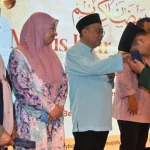
“This initiative is implemented through the Seagrass Mapping and Community Activity Program via a strategic partnership with Yayasan Petronas, supported by the Sabah Biodiversity Centre and implementing partners including Universiti Putra Malaysia, Universiti Malaya, and Universiti Malaysia Sabah. The program emphasizes the importance of preserving and conserving seagrass ecosystems while supporting scientific research and empowering the resilience of coastal communities,” he said.
The two-year program includes:
- Mapping seagrass distribution in Malaysia’s shallow waters.
- Assessing species diversity and habitat cover.
- Determining and mapping blue carbon stock status.
- Empowering Communication, Education, and Public Awareness (CEPA).
To date, preliminary mapping has recorded a coverage area of 1,846.1 hectares across West Sabah, Labuan, Melaka, and Negeri Sembilan, which will be expanded in stages according to the implementation plan.
The primary outcome of this initiative is the creation of the first comprehensive National Seagrass Map to serve as a spatial database supporting the National Plan of Action for Seagrass (NPOA Seagrass).
The map will serve as a technical reference for coastal development planning, including site suitability assessments, reducing spatial use conflicts, and implementing mitigation measures to protect sensitive habitats.
Adnan stated that the science-based approach strengthens DOF’s capability to plan habitat protection measures more accurately and effectively.
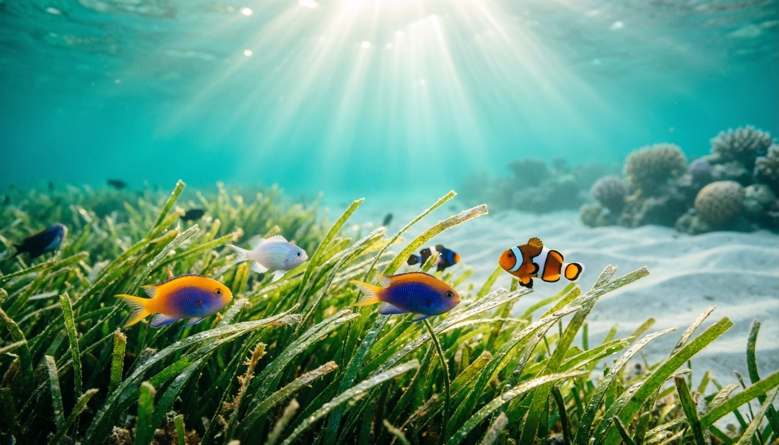
“Seagrass is a vital component of the coastal ecosystem that supports the survival of fishery resources and marine biodiversity. The production of this National Seagrass Map is an essential foundation for refining management actions and ensuring these habitats continue to function sustainably,” he said.
He further noted that management proposals and protection mechanisms would be refined in accordance with the department’s mandate under the Fisheries Act 1985.
Regarding the status of seagrass in Malaysia, a desktop study in the Malaysia Marine Ecological Gap Assessment (MEGA) report recorded 17 seagrass taxa from three families for the period 1993–2021. High diversity was recorded at Tanjung Adang Shoal, Johor and Teluk Sepinong, Sandakan, Sabah (16 taxa), while Zostera japonica was recorded specifically at Merambong Shoal, Sungai Pulai, Johor.
The report also indicates that while some taxa are categorized as Least Concern by the International Union for Conservation of Nature (IUCN), certain taxa show declining trends—such as Enhalus acoroides, Halodule pinifolia, and Halophila beccarii—reinforcing the need for focused management and protection.
DOF calls upon all parties, including government agencies, local authorities, industry, and coastal communities, to support the conservation of seagrass habitats through sustainable and science-based coastal development practices for the sake of marine biodiversity and the nation’s fishery resources.