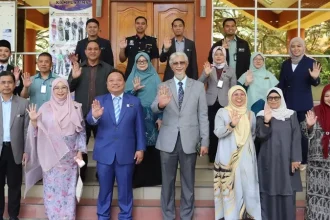

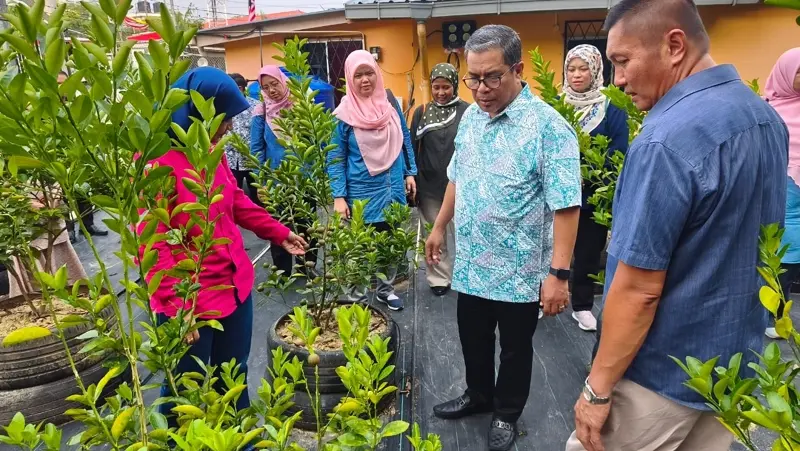
LABUAN — The Laman Agro Bistari programme implemented by the Community Development Department (KEMAS) is expected to empower the Kampung Belukut community through agriculture while reducing household living costs and strengthening food security.
KEMAS Director-General Datuk Mohd Hanafi Man said the programme encouraged residents to utilise available spaces around their homes to grow vegetables, food crops and other agricultural produce for household consumption, with the potential to generate additional income when implemented systematically and collectively.
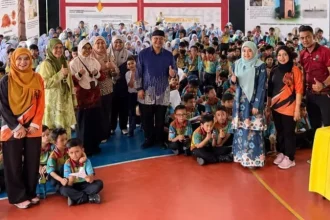
“This is a programme that encourages self-empowerment, reduces the burden of living costs and strengthens food security at the household level,” he said at the Laman Agro Bistari KEMAS Kampung Belukut launch and agricultural equipment handover ceremony here today.
He said KEMAS, which had served various segments of society for more than six decades, needed to continue evolving and improving its services to ensure that rural communities progressed in tandem with the country’s development.
He said while KEMAS was widely known for its TABIKA and TASKA programmes, the department had also introduced community economic empowerment initiatives through locality-based programmes such as Laman Agro Bistari.
“Imagine if the space around our homes could be utilised to produce vegetables, food crops or agricultural produce for our families. Even on a small scale, such efforts can add value to our daily lives,” he said.
Mohd Hanafi said agricultural produce from such initiatives could not only be used for household consumption but also potentially become an additional source of income for the community if implemented in an organised and group-based manner.
He said the approach was in line with efforts to build communities that were more self-reliant and resilient, while enabling them to utilise resources available in their surroundings.
He also stressed that the success of the Laman Agro Bistari programme could not depend on any single party, but required cooperation and collaboration among the village committee and rural community, KEMAS, the Agriculture Department and other stakeholders.
“The government provides the space, guidance and support, while the community serves as the main driving force behind the success of the programme,” he said.
He said the project should also involve families and the rural community collectively so that its benefits could be enjoyed more widely.
Mohd Hanafi said Kampung Belukut’s track record as Labuan’s first Kampung Angkat Madani, coupled with its third-place achievement in the 2024 Anugerah Desa Madani competition, gave him confidence that the lime and hydroponic vegetable projects would succeed.
“I sincerely hope that the equipment, including wheelbarrows, fertiliser, hoes, tanks and others, costing RM15,000, will be put to the best possible use,” he said.
He urged the community to continue practising the spirit of gotong-royong, sharing knowledge and working together in managing the Laman Agro Bistari so that the initiative could progress beyond the community level and potentially develop into a commercial supply venture.
Mohd Hanafi said the success of the programme should not only be measured through the economic achievements of the community, but more importantly through the skills imparted to residents and its role as a platform to strengthen harmony among the people of Kampung Belukut.
“I believe the success of this programme will not only be reflected in the economic achievements of the community, but more importantly, in equipping the community with skills that will ultimately serve as a platform to strengthen harmony among the people of Kampung Belukut,” he said.
He expressed hope that the success of the Laman Agro Bistari project in Kampung Belukut would become a source of pride for the Labuan community and serve as a role model for other villages.
“May the success of Kampung Belukut become a source of pride for the people of Labuan and serve as a role model for other villages as well,” he said.
Mohd Hanafi also expressed appreciation to the Labuan Agriculture Department, local leadership, KEMAS Labuan personnel and all agencies involved in ensuring the smooth implementation of the project.
He said he hoped the good relationship between KEMAS, local leaders and the Labuan community would continue to be strengthened through joint efforts towards prosperity and sustainable development.