

LABUAN — When the factory where he had worked for years shut down in 2019, Mohamad Alias faced an uncertain future.
At 53, with a wife and seven children to support, the father from Kampung Tanjung Aru found himself unemployed and struggling to secure another stable job. Despite spending nearly two years searching for work, opportunities remained elusive, largely due to his age.
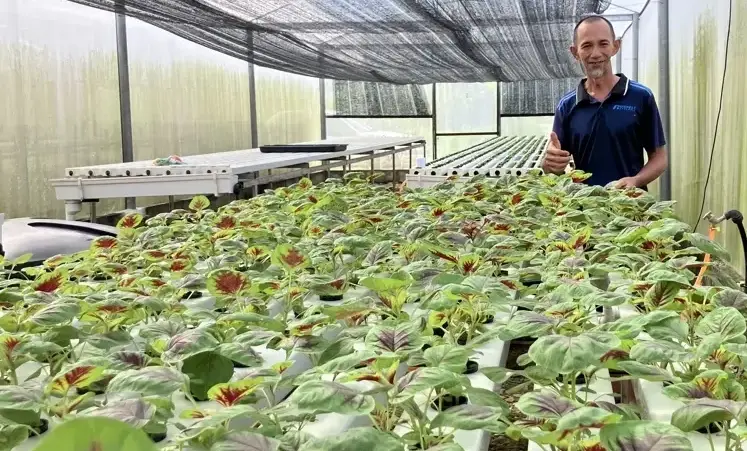
Today, however, Mohamad stands proudly inside his greenhouse at Kampung Sungai Bedaun, having transformed his life from factory worker to hydroponic farmer through a programme initiated by the Federal Territories Islamic Religious Council (MAIWP).
Recalling one of the most difficult periods of his life, Mohamad said he had exhausted every avenue in his search for employment before seeking assistance from MAIWP Baitulmal.
Initially, he hoped to receive support to become a fisherman so that he could continue providing for his family.
“Instead of becoming a fisherman, MAIWP officers asked whether I would be interested in becoming a hydroponic farmer. They had a hydroponic farming project, known as Laman Hidroponik MAIWP Labuan, on their land in Kampung Sungai Bedaun,” he said.
Mohamad accepted the proposal and embarked on a journey that would eventually change his family’s future.
Before participating in the project, he and several other asnaf recipients underwent six months of training conducted by trainers from Universiti Putra Malaysia (UPM).
“I was assigned to the hydroponics course. At that time, I had absolutely no knowledge of hydroponic farming, but I was eager to learn,” he said.
Operations at the greenhouse began in August 2023 after construction was completed.
Although he acknowledged facing numerous challenges in the beginning, Mohamad said the knowledge acquired during the training helped him manage both the greenhouse and the business aspects of the venture.
“When I first saw the greenhouse, I was surprised by its size. I wondered whether I would be able to manage it.
“But I held firmly to four values — determination, resilience, patience and self-confidence.
“If we do not possess these values, it will be difficult to succeed in farming. Patience is especially important because there are times when crops fail to grow properly due to seed quality or other factors. When that happens, our sales and income are affected,” he said.
Besides technical farming skills, MAIWP also provided training in business management, including record-keeping, financial management and sales reporting.
The Farmers’ Organisation Authority (LPP) Labuan further assisted participants by providing guidance on marketing and distribution channels.
According to Mohamad, gaining public confidence was among the initial challenges.
Many consumers were unfamiliar with hydroponically grown vegetables and were concerned about the use of fertilisers.
“At first, some customers thought that because hydroponic vegetables rely on nutrient solutions, we might be using harmful chemicals.
“After we explained the process, they understood that our vegetables are grown using quality nutrients and are pesticide-free. Hydroponic vegetables absorb only the nutrients they need through their roots,” he explained.
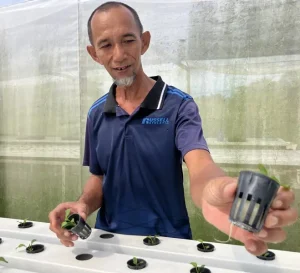
Today, Mohamad distributes his produce to grocery stores in Lajau and Kampung Tanjung Aru while also marketing directly through social media.
“Some customers also come directly to the greenhouse to buy fresh vegetables,” he said.
Balancing work and family responsibilities remains an important part of his daily routine.
Most mornings are spent tending to crops, monitoring water flow systems and preparing vegetables for sale. Afternoons are often dedicated to his children, including sending them to school and religious classes.
“Managing the greenhouse and taking care of my family require careful time management, but I am grateful that I can do both,” he said.
Mohamad credits much of his motivation to his family.
Of his seven children, three have already completed their studies. His eldest child, a graduate sponsored by MAIWP, is currently employed by the Selangor Islamic Religious Council (MAIS). Two others are working in Labuan, while another is preparing to further his studies at ADTEC JTM Labuan.
His remaining children are still in school.
“Alhamdulillah, the income from the greenhouse allows me to support my family. It is sufficient for our daily needs,” he said.
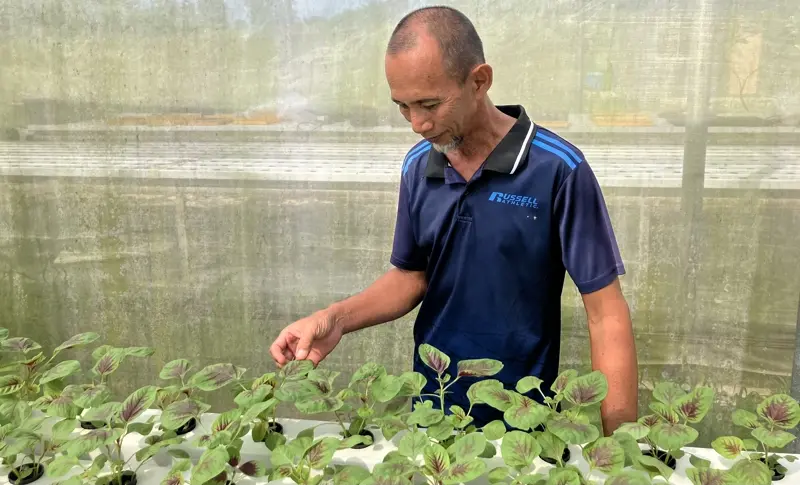
The hydroponic project currently consists of six greenhouses, each operated independently by an asnaf participant from different villages in Labuan.
Inside Mohamad’s greenhouse are four cultivation tables, each containing approximately 500 planting holes.
He grows a variety of vegetables, including bitter mustard greens (sawi pahit), sweet mustard greens (sawi manis), spinach (bayam) and lettuce (salad), all of which enjoy strong demand in the local market.
Monthly earnings vary depending on harvest yields and market demand.
“On average, I can generate about RM1,200 a month when two tables are harvested. If all four tables produce successfully, the income can exceed RM2,000,” he said.
Lettuce is among the most profitable crops.
“For lettuce, I can sell each head for about RM2. A single table can generate more than RM1,000 in sales when the harvest is good,” he explained.
At times, demand exceeds supply.
“There are occasions when we cannot meet customer demand because our production is limited,” he said.
One significant advantage of the programme, Mohamad noted, is that all sales revenue belongs to the farmers.
“MAIWP does not take any percentage from our sales. The income belongs entirely to us as asnaf participants,” he said.
Operating costs remain relatively low.
Monthly expenses for water and electricity average around RM45, while additional costs include seeds, growing sponges and other supplies.
“MAIWP provided everything during the initial stage. Once we started generating income, we became responsible for sustaining operations ourselves,” he said.
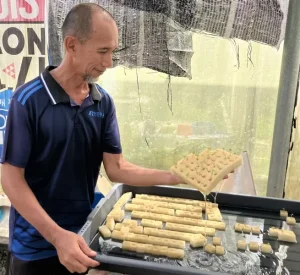
To ensure the project’s success, MAIWP officers regularly monitor the greenhouses, while farmers conduct daily checks on irrigation systems and nutrient supplies.
“Every day, I inspect the water flow to ensure the plants receive adequate nutrients. Any interruption can affect crop growth,” he said.
Beyond improving individual livelihoods, Mohamad believes the initiative contributes to Labuan’s food security by reducing dependence on imported vegetables.
“It is a constructive effort by MAIWP to increase local agricultural production and make Labuan more self-sufficient.
“Many vegetable sellers who previously relied entirely on wholesalers are now sourcing produce from local growers like us,” he said.
The collaboration between MAIWP, LPP and local agencies has also created additional market opportunities through programmes such as Madani Sales, where vegetables are purchased in bulk.
As he reflects on the journey from unemployment to self-sufficiency, Mohamad said the experience has given him renewed confidence and hope.
“Today, I can breathe a sigh of relief because I have gained valuable experience and a stable source of income for my family,” he said.
For others facing hardship, he offers a simple message.
“To fellow asnaf and anyone experiencing difficulties, do not give up. Keep striving to improve your life and support your family.
“Seek help from relevant agencies when necessary and have the courage to start again.
“I am deeply grateful to MAIWP, LPP, the Agriculture Department and all zakat contributors who have helped improve the lives of families like mine,” he said.