

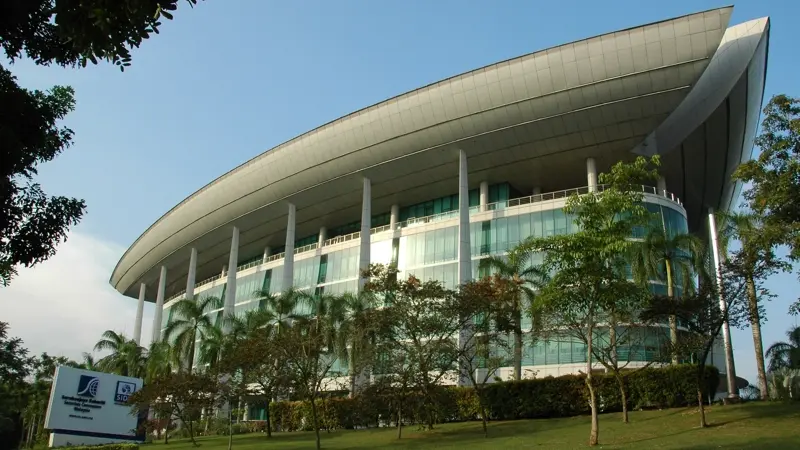
KUALA LUMPUR — Malaysia’s Single Family Office (SFO) Incentive Scheme has attracted an indicative RM20.8 billion in assets under management (AUM) as at September 2026, exceeding its initial RM2 billion target by more than tenfold ahead of schedule.
Securities Commission Malaysia (SC) Executive Director Shahrul Amry Abd Malek said the achievement reflected growing interest from local families, Malaysians bringing their wealth back home and foreign families seeking to establish family offices in Malaysia.
Launched in September 2024, the scheme aims to attract long-term private capital by requiring participating families to invest, spend and hire locally as conditions for receiving tax incentives.
Speaking at the Family Office Summit Malaysia 2026 here today, Shahrul Amry said the scheme was already generating positive spillover effects for the wider capital market and professional services ecosystem.
It is expected to bring at least RM200 million in fresh investments while creating opportunities for banks, fund managers, investment advisers, trustees, lawyers and tax advisers serving family offices.
“Resilient capital needs a resilient market. In a period of considerable volatility, the Malaysian capital market’s size grew to RM4.3 trillion last year and has further increased to RM4.5 trillion currently. We remain the world’s largest sukuk market,” he said.
“Under our Capital Market Masterplan 2026–2030, our ambition is to make Malaysia a regional hub where companies raise capital and investors choose to base themselves.”
Malaysia’s appeal to private capital is further supported by its strategic location at the heart of ASEAN, competitive and high-quality talent, established common law system, leadership in Islamic finance and long-term residence pathways for family office principals, their families and professionals supporting their operations.
Among the investment opportunities are micro, small and medium enterprises (MSMEs), which contribute close to 40 per cent of gross domestic product (GDP), as well as mid-tier companies with the potential to become future listed companies.
With an estimated RM268 billion financing gap among MSMEs, family offices can complement traditional financing sources by providing patient and flexible capital to businesses with strong growth potential.
Co-investment platforms such as the Malaysia Co-Investment Fund (MyCIF) have also helped mobilise RM7.7 billion for more than 11,500 businesses through public funds invested alongside private investors.
On further strengthening the family office ecosystem, Shahrul Amry highlighted the Multi-Family Office (MFO) model announced under Budget 2027, which allows families to appoint an SC-licensed fund manager directly instead of establishing and operating a separate management company.
The arrangement provides access to professional investment management services while allowing families to retain their individual investment mandates. They may also choose to operate through a Single Family Office, a Multi-Family Office or a combination of both.
However, the existing substance requirements for the zero per cent tax rate will remain applicable to each Single Family Office Vehicle.
Other refinements include recognising contributions to the Iskandar Regional Development Authority’s Social Fund as local operating expenditure, allowing participating families to support education, skills development and community programmes in Johor.
Newly approved families will also be required to apply for their first certification within 18 months of receiving conditional approval to ensure that approved applications translate into operational family offices.
On regional cooperation, Shahrul Amry highlighted Malaysia’s growing financial links with Hong Kong, including arrangements allowing companies to pursue dual initial public offerings (IPOs) in both markets using a single set of submission documents.
The extension of mutual recognition of funds to exchange-traded funds (ETFs) and real estate investment trusts (REITs) is also expected to broaden investment opportunities between the two markets.
For family offices, these arrangements would give businesses access to investors in both North Asia and ASEAN while broadening portfolio exposure through regulated investment products.
Malaysia also offers opportunities to invest in businesses and projects supporting the country’s next phase of growth, including emerging businesses, established mid-tier companies and energy transition projects.
“At the end of the day, resilient capital looks for a home that is itself resilient: a deep capital market, a credible regulator, connectivity to the region and beyond, and a framework built to last. Malaysia is ready to be that home. We invite you to build that future with us,” he said.
The summit, themed “Resilient Capital: Thriving in a Turbulent World”, brought together industry players to discuss opportunities and strategies for family offices amid changing global economic and investment conditions.