

KOTA KINABALU — Chief Minister Datuk Seri Panglima Hajiji Noor has called on all state ministries, departments, statutory bodies and agencies to strengthen cooperation in coordinating data and implementing poverty eradication programmes to ensure assistance reaches those in need more systematically and effectively.
He said some ministries, departments and agencies were still implementing poverty eradication programmes independently, resulting in insufficient coordination and potentially overlapping assistance.
While acknowledging the important mandates of each agency, Hajiji said the public should not be burdened with repeated bureaucratic procedures or inconsistent information on available assistance.
“I have entrusted the Sabah Maju Jaya (SMJ) Secretariat with the responsibility of coordinating the state’s poverty eradication agenda.
“However, comprehensive cooperation among all agencies still needs to be strengthened, particularly in sharing recipient data, information on assistance already provided and reporting on the outcomes of interventions,” he said.
Reach More Customers.
Promote your business with Labuan Times.
Advertise Now →
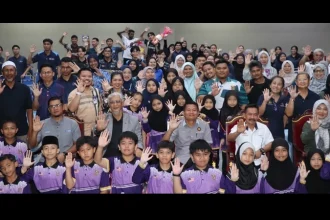
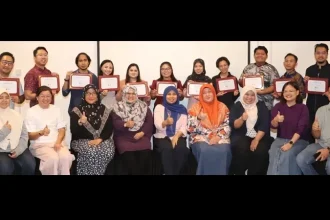
He was speaking at the opening of the People’s Well-being and Transformation Symposium (KESTRA) 2026, an initiative under the SMJ 2.0 Development Plan, at the Sabah International Convention Centre (SICC) here today.
Hajiji said the successful elimination of hardcore poverty among 22,510 heads of households identified under the Sabah Hardcore Poverty Eradication Programme 2023 demonstrated the effectiveness of inter-agency cooperation and collective efforts.
The target was achieved on July 31, 2024, in less than a year, through data sharing, field verification, coordinated assistance and the implementation of appropriate interventions.
He said the achievement covered 22,510 heads of households and 94,315 household members, bringing the total number of individuals involved to 116,825.
However, he stressed that achieving zero hardcore poverty did not necessarily mean all the families concerned had escaped poverty, as their socioeconomic circumstances could change due to job losses, illness, increasing dependants, disasters or revisions to the Poverty Line Income (PGK).
Reach More Customers.
Promote your business with Labuan Times.
Advertise Now →
He said the appointment of the SMJ Secretariat as coordinator was not intended to take over the responsibilities of individual ministries and agencies, but to ensure programmes were properly coordinated and their impact systematically assessed.
Hajiji said data management and coordination mechanisms across agencies also needed to be improved to ensure consistency in the collection, dissemination, presentation and use of information at all levels.
The State Government would strengthen the use of eKasih data and the Sabah State Database (PADANS) as official reference sources to identify overlapping assistance, gaps in coverage and necessary follow-up actions for each household.
He also called for the full utilisation of the MySMJ Profiling Programme, which deploys officers across all 73 State Legislative Assembly constituencies to verify poverty data on the ground.
The programme, he said, would provide a better understanding of household backgrounds, employment capabilities, training requirements and changes in socioeconomic circumstances.
“We want decisions to be based on actual conditions on the ground, not merely assumptions. I urge all ministries and agencies to prioritise coordination, information sharing and consistent reporting because poverty eradication is a shared responsibility,” he said.
Reach More Customers.
Promote your business with Labuan Times.
Advertise Now →
Hajiji said 54 assistance-providing agencies from the State and Federal governments, together with industry players, were currently involved in 134 assistance interventions under the five pillars of the Hardcore Poverty Eradication Programme.
The five pillars cover housing, education, employment, welfare and finance, as well as entrepreneurship and training.
However, he cautioned that the number of programmes implemented, funds allocated and assistance distributed did not necessarily reflect meaningful outcomes.
“If we merely report the number of assistance packages distributed, presentation ceremonies held or the total allocations provided, we have yet to answer the bigger question: how many people have truly escaped the cycle of poverty?
“People do not live on programme statistics. They need income, food, shelter, education and hope for the future,” he said.
He said the government must establish verifiable evidence of how many people had genuinely escaped poverty rather than relying solely on programme implementation statistics.
Reach More Customers.
Promote your business with Labuan Times.
Advertise Now →
In this regard, efforts to develop a state poverty assessment framework that reflects the realities and needs of Sabah’s population must also be strengthened.
Citing official statistics from the Department of Statistics Malaysia (DOSM), Hajiji said Sabah’s absolute poverty rate declined from 19.7 per cent in 2022 to 17.7 per cent in 2024, while hardcore poverty fell from 1.2 per cent to 0.7 per cent.
Nevertheless, he noted that Sabah continued to record the highest poverty rate among all states, remaining above the national average.
He said the 13 additional hardcore poverty indicators for Sabah, agreed upon in 2023, should be fully utilised as assessment and profiling tools to identify the underlying causes of poverty in individual households, determine suitable interventions and monitor changes in their circumstances over time.
Hajiji said all findings and recommendations from KESTRA 2026 must be consolidated into a practical action plan for the State Government’s consideration and subsequently presented to the State Cabinet to ensure clear and effective follow-up action.