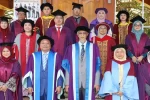

KUALA LUMPUR — As businesses accelerate digital transformation and adopt more sustainable practices, the role of accountants is expanding beyond traditional functions—driving demand for future-ready talent in Malaysia.
MIA President Saniza Said said the profession has remained agile in adapting to change while upholding its core principles.
“The accountancy profession has always been agile in adapting to remain resilient and future-ready. At the same time, we continue to uphold ethics, financial acumen, and professional judgement—the enduring foundations of the profession,” she said.
As regulator and developer of the profession, the Malaysian Institute of Accountants (MIA) is stepping up efforts to strengthen the capacity and capabilities of accountancy talent.
MIA Chief Executive Officer G. Shanmugam said a key priority is to clearly communicate the profession’s value proposition to attract and retain talent.
“Building a strong talent pipeline is critical to addressing concerns over the supply of accountancy professionals required to meet market demand,” he said.
Globally, the International Federation of Accountants (IFAC) is highlighting the expanding role of accountants in digitalisation, sustainability reporting, and assurance. Regionally, the ASEAN Federation of Accountants (AFA) has also emphasised the need to strengthen the talent pipeline to support sustainable economic growth.
Efforts to boost the profession’s appeal require a coordinated approach across the talent development pipeline—from early education to professional qualification and career progression.
Among the key initiatives is early engagement with students at school and university levels through career talks, conferences, and accounting competitions.
This includes preparing students for a digital-driven workplace, where skills in analytics and artificial intelligence are increasingly important, as well as building capabilities in sustainability, particularly in reporting and assurance.
MIA is also advocating curriculum enhancements aligned with industry needs and supporting academicians through Train-the-Trainer programmes focused on digital transformation and sustainability.
The Chartered Accountant (C.A.(M)) designation continues to serve as a benchmark of professionalism, reflecting MIA’s commitment to producing competent, ethical, and globally recognised professionals.
From 2023 to 2025, MIA recorded an average annual membership growth of about 2.6 per cent, with total membership nearing 42,000.
On retention, Saniza noted that an accountancy qualification offers strong versatility across industries, both locally and internationally.
“Today, accountants are moving beyond traditional roles in audit, public practice, and finance into C-suite positions, fintech, and emerging areas such as sustainability, including climate measurement, reporting and assurance, carbon taxation, and green finance,” she said.
To address capacity constraints in audit and finance functions, MIA is also encouraging organisations to adopt digital solutions and automate routine processes.
“This allows accountants to focus on higher-value work involving professional judgement, data interpretation, and risk management, ultimately strengthening decision-making, value creation, and trust,” said Shanmugam. (Bernama)