

KUALA LUMPUR — Budget 2027 reinforces the government’s commitment to institutional and legal reforms, strengthens water and energy security, and improves access to affordable housing and public infrastructure to enhance the well-being of Malaysians.
Minister in the Prime Minister’s Department (Law and Institutional Reform) Datuk Seri Azalina Othman Said said the MADANI Government remained committed to comprehensive legal reforms, including studying the proposed establishment of the Malaysian Law Reform Commission to modernise outdated laws and address legal gaps.
She said the government’s reform efforts also included strengthening parliamentary autonomy, empowering parliamentary select committees and introducing the Prime Minister’s Question Time (PMQT), alongside legislative changes to protect human rights and improve access to justice.
“The most meaningful reform is the government’s willingness to limit its own powers,” she said in a statement on Budget 2027 today.
Azalina said the government would continue pursuing reforms while respecting the parliamentary democratic process, although the proposal to limit the prime minister’s tenure had not secured the required two-thirds majority in Parliament, while the separation of the roles of the Attorney-General and Public Prosecutor remained under review.
On public welfare, she welcomed three initiatives to strengthen the Second Chance Policy, which has helped more than 250,000 Malaysians emerge from bankruptcy since 2023.
The measures include raising the bankruptcy threshold from RM100,000 to RM150,000 from 2027, extending the Second Chance Policy to primary caregivers of family members with disabilities, chronically ill patients, senior citizens, gig workers and individuals with irregular incomes, and facilitating automatic discharge after as early as three years for eligible individuals under Section 33C of the Insolvency Act 1967.
She also welcomed the extension of individual lifestyle tax relief to cover the cost of vaccinating and adopting pets from registered centres, aimed at encouraging responsible pet ownership.
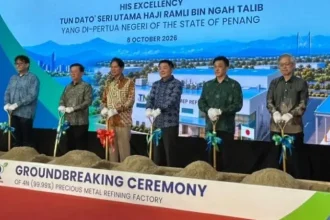
Azalina, who is also Pengerang Member of Parliament, welcomed PETRONAS’ full ownership of the Pengerang Integrated Complex to strengthen national fuel security. The development of the Pengerang Biorefinery with Enilive, Eni and Euglena to produce lower-carbon fuels, including sustainable aviation fuel (SAF), hydrotreated vegetable oil (HVO) and bio-naphtha, is also expected to create economic opportunities and high-value jobs.
Meanwhile, the Ministry of Energy Transition and Water Transformation (PETRA) has been allocated RM5.33 billion under Budget 2027 to strengthen water and energy infrastructure, improve service resilience and promote more efficient energy use.
Deputy Prime Minister and Energy Transition and Water Transformation Minister Datuk Amar Fadillah Yusof said the budget prioritised reliable water supplies, reduced flood risks and more efficient and cleaner energy use.
Six flood mitigation projects worth RM336 million have been completed, while 82 others are being implemented according to schedule. New projects for 2027 include the Kuching City Flood Mitigation Project Phase Two, the Integrated River Basin Development Project for Sungai Golok Phase Two in Kelantan, and the Sungai Kemaman Integrated River Basin Development Project in Terengganu.
The proposed Lebir Dam project in Kelantan has the potential to reduce flood risks for 320,000 people and supply 337 million litres of raw water daily to 353,222 people. Other initiatives include the construction of the Machang Water Treatment Plant and the replacement of ageing pipes to improve water supply in the state.
PETRA will also implement Phase Two of the Non-Revenue Water Reduction Programme, worth RM2.5 billion, to replace 1,900 kilometres of critical ageing pipes. Public sewerage systems on Pulau Tuba and in Langkawi, Pulau Redang and Pulau Tioman will also be upgraded.
To ease household electricity costs, the government will raise the monthly electricity bill protection threshold from 600 kilowatt-hours (kWh) to 800 kWh, benefiting more than eight million domestic consumers, or up to 90 per cent of the total.
In Sabah, the government has agreed to install a STATCOM system at the Dam Road and Segaliud main intake substations at a cost of RM204 million, while the Southern Link transmission project will continue to strengthen long-term electricity supply security.
The budget also includes RM1.5 billion for solar installations on government buildings, with 150 megawatts under the Large Scale Solar 6 programme reserved for Bumiputera companies. Other initiatives include investments in the national grid, energy storage and hybrid energy projects, as well as rebates of up to RM200 for energy-efficient air conditioners and refrigerators under the NUR MADANI programme.
Separately, the Ministry of Housing and Local Government (KPKT) has been allocated RM6.355 billion, an increase of 4.38 per cent or RM266.74 million from RM6.088 billion in 2026, to strengthen housing, local government development, community welfare and fire and rescue preparedness.
Housing and Local Government Minister Nga Kor Ming said the MADANI Government would ensure that public allocations delivered tangible benefits to the people through safer and more comfortable housing, quality public facilities, more efficient local authority services and better community well-being.
Among the key initiatives is an allocation of RM1 billion for the Rumah Mesra Rakyat and Program Residensi Rakyat schemes, including four new housing projects in Kulai, Johor; Nilai, Negeri Sembilan; Paya Rumput, Melaka; and Lembah Pertang, Terengganu.
The Housing Credit Guarantee Scheme will provide guarantees of up to RM20 billion to assist 80,000 first-time homebuyers, particularly self-employed individuals without fixed incomes, in securing housing financing.
Budget 2027 also provides full stamp duty exemptions on loan agreements and instruments of transfer for first homes priced up to RM500,000. For homes priced up to RM750,000, full exemption applies to the first RM500,000, with a 50 per cent exemption on the remaining amount. The exemptions apply to sale and purchase agreements completed from Jan 1, 2027, to Dec 31, 2030.
To improve local public facilities, RM700 million has been allocated for small projects in local authority areas, including upgrading parks, public toilets and stalls, as well as rebuilding selected hawker complexes and markets. Another RM320 million will be provided to repair and upgrade slopes, drains and drainage systems nationwide.
The budget also allocates RM100 million to repair and rebuild ageing infrastructure in new villages and RM80 million for the maintenance and upgrading of non-Muslim houses of worship nationwide.
In addition, RM2.3 billion has been allocated for the construction and maintenance of quarters for essential service personnel, including firefighters, police officers, doctors, military personnel and teachers.
The hourly allowances for volunteer personnel under the People’s Volunteer Corps (RELA), Auxiliary Firefighters, Volunteer Police and Civil Defence Force will also be increased to RM9 for volunteers and RM10.80 for supervisors, benefiting nearly 50,000 volunteers.
KPKT said the initiatives would be implemented efficiently and with integrity, in line with the aspirations of the MADANI Economy and the 13th Malaysia Plan (RMK13), to ensure that the benefits of development reached communities nationwide.