
KUALA LUMPUR — Approved investments in Malaysia reached RM218.5 billion in the first half of 2026 (1H 2026), covering 2,746 projects across the services, manufacturing and primary sectors. This is 11.7 per cent higher than the RM195.5 billion recorded in the same period of 2025. More importantly for Malaysians, these approved projects are expected to create 99,030 jobs once fully implemented, 8.4 per cent more jobs than the first half of 2025.
The 1H 2026 approvals equal 50.7 per cent of the RM431.1 billion approved in the whole of 2025. The performance stands out commendably against a softening global backdrop – the International Monetary Fund’s July 2026 World Economic Outlook put world growth at 3.0 per cent for the year, while Malaysia’s economy is projected to expand 4.7 per cent, ahead of both the global and regional averages.
WHO IS INVESTING IN MALAYSIA
Foreign investments (FI) accounted for RM126.9 billion, or 58.1 per cent of total approved investments, an increase of 18.5 per cent year-on-year. Domestic investments (DI) contributed RM91.6 billion, or 41.9 per cent, representing a 3.5 per cent year-on-year growth. Collectively, the figures reflect continued confidence from both international and Malaysian investors.
The United States was the largest foreign source at RM33.1 billion, followed by Singapore (RM25.9 billion), Japan (RM22.3 billion), People’s Republic of China (RM16.5 billion) and the Cayman Islands (RM4.1 billion). Together these five top sources supplied more than 80 per cent of approved FI.
WHERE INVESTMENT IS CREATING OPPORTUNITIES
Investment was spread across key economic states and industries. Selangor led with RM70.0 billion across 835 projects, the highest number of approved projects among all states. Its services sector attracted digital investments in areas such as AI, big data analytics, cybersecurity, FinTech, cloud computing and IoT. Johor followed with RM59.4 billion, supported by the JS-SEZ and upcoming RTS Link connectivity. W.P. Kuala Lumpur recorded RM26.6 billion, including residential and serviced apartment developments linked to urban growth, transit-oriented development (TOD) and demand for more accessible housing. Pulau Pinang secured RM20.2 billion, led by advanced manufacturing and semiconductors, while Sarawak recorded RM10.8 billion, mainly from offshore oil and gas exploration projects.
SERVICES: DIGITAL GROWTH, WITH JOBS AND LOCAL OPPORTUNITIES
The services sector attracted the largest share of approved investments at RM149.6 billion, up 21.0 per cent. Across 1,750 projects, these investments are expected to create 34,475 jobs.
FI in services rose 66.7 per cent to RM86.9 billion, while domestic investments contributed RM62.7 billion (41.9 per cent). This mix brings international capital into Malaysia while creating more room for local businesses and suppliers to participate in growing industries.
Information and communications led services growth, with approved investments rising 68.2 per cent to RM103.3 billion. Data-centre and cloud-computing projects accounted for RM95.8 billion, close to 44.0 per cent of all approved investments during the period, as demand for AI computing power continued to grow across the region.
Malaysia, ranked by UNCTAD among the world’s ten largest data-centre destinations, has set a target of becoming an ‘AI nation’ by 2030. To manage the pace of expansion, the Data Centre Task Force, a strategic platform to streamline investment approvals on data centres, clears only those with secured power and water and demonstrable green compliance, while giving priority to operators that support the local supply chain.
Other Leading Services Sub-Sectors:
● Real Estate: RM33.5 billion
● Utilities: RM3.0 billion
● Transport Services: RM2.9 billion
● Support Services: RM2.3 billion
MANUFACTURING: MORE PROJECTS AND HIGHER-VALUE JOB OPPORTUNITIES
The manufacturing sector secured RM51.3 billion in approved investments across 973 projects. The number of projects rose 88.2 per cent y-o-y, meaning more investments are being spread across a broader base of manufacturing activity. Manufacturing approved investments stood at RM51.3 billion in 1H 2026. While this was 25.1 per cent below the exceptionally high level recorded in 1H 2025, the comparison reflects RM18.5 billion in lumpy projects approved in the basic metals, chemicals and non-metallic minerals industries during the same period last year. Excluding these projects, manufacturing approved investments grew 2.6 per cent y-o-y.
Of the RM51.3 billion approved, RM25.8 billion or 50.3 per cent came from new projects. Another RM25.5 billion, or 49.7 per cent, came from companies expanding or diversifying existing operations. New projects rose 112.2 per cent y-o-y, while reinvestment by established companies shows that businesses already operating in Malaysia continue to see opportunities to grow here.
FI contributed RM32.7 billion (63.8 per cent) of the total approved investments in the manufacturing sector, while DI grew strongly by 23.0 per cent y-o-y to RM18.6 billion.
Manufacturing remained the biggest source of expected new employment, with 64,555 jobs – 65.2 per cent of all jobs expected from approved investments. The local MTS component grew 11.0 per cent y-o-y to 21,677 jobs. This demonstrates that improvements in job quality directly benefits Malaysians. Furthermore, 19.7 per cent of local manufacturing jobs offer monthly salaries of RM5,000 and above, up 7.7 per cent y-o-y.
Leading Manufacturing Industries:
● Electrical and Electronics (E&E): RM16.6 billion
● Machinery and Equipment (M&E): RM7.5 billion
● Chemicals and Chemical Products: RM5.5 billion
● Transport Equipment: RM4.9 billion
● Food Manufacturing: RM4.9 billion
These five largest industries made up 76.9 per cent of manufacturing approvals, with machinery and equipment (up 44.8 per cent) and food manufacturing (up 40.9 per cent) among the fastest-growing.
Nearly one-third of approved manufacturing projects (31.0 per cent or 302 projects) plan to export at least 80 per cent of their output. The number of these highly export-oriented projects rose 57.3 per cent y-o-y. E&E, M&E, fabricated metal products, plastic products, transport equipment and food manufacturing, together accounted for 70.9 per cent of the overall 302 export-oriented manufacturing projects.
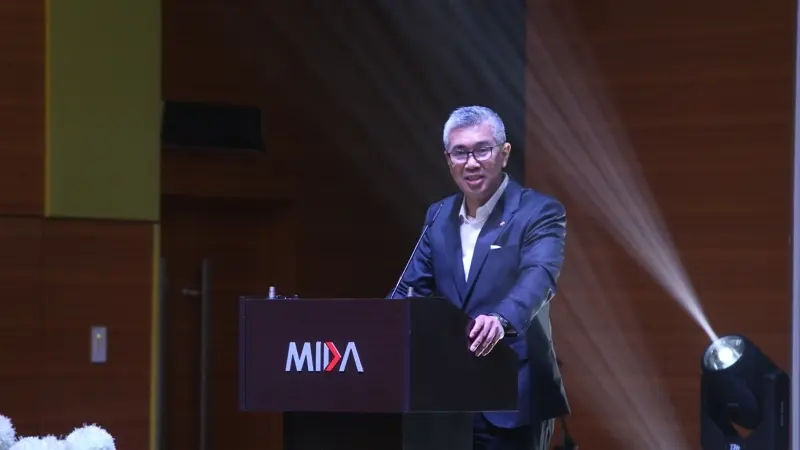
“The half-year performance is powered by our two largest economic engines – services and manufacturing sectors, and both showcase quality, not just scale of investments. Services grew 21 per cent, led by digital and information-technology investment that is building the backbone for our AI Nation 2030 ambitions while creating opportunities across the wider economy. In manufacturing, an 88.2 per cent jump in project numbers and the shift of semiconductor investment from back-end assembly towards front-end design and equipment clearly shows the operationalisation of the National Semiconductor Strategy. Investor confidence has also been reinforced by structural reforms that lifted Malaysia’s standing in the IMD World Competitiveness Ranking for 2026, 15th place out of 70 economies, Malaysia’s best placing in over a decade. Guided by the New Industrial Master Plan 2030, MIDA will continue to prioritise and implement investments that transfer technology, deepen local vendor participation and create high-value jobs for Malaysians.” — YM Tengku Datuk Seri Utama Zafrul Tengku Abdul Aziz, Chairman of MIDA
PRIMARY SECTOR: DOMESTIC COMPANIES TAKE ON LARGER ENERGY PROJECTS
The primary sector surged 414.0 per cent y-o-y to RM17.6 billion, from RM3.5 billion in the same period of 2025. The increase came entirely from 23 offshore oil and gas projects, and has already exceeded the sector’s RM14.2 billion total for all of 2025. Domestic capital led the sector at RM10.3 billion, or 58.5 per cent, highlighting the growing capacity of Malaysian companies to undertake large upstream projects. Sarawak drew the largest share at RM9.0 billion (51.1 per cent), followed by Sabah at RM6.1 billion (34.9 per cent). The increase came as prolonged disruption to global energy supply and higher crude prices pushed Asia-Pacific buyers to diversify their sources. As an established exporter of liquefied natural gas, Malaysia is positioned to attract capital seeking long-term energy security; its upstream industry is estimated to need RM50 billion to RM60 billion of investment a year, to meet rising demand. The Malaysia Bid Round 2026, which offers new exploration blocks in the Sandakan, Western Sarawak and Malay basins, is expected to support further activity.
FROM APPROVALS TO REAL JOBS AND OPERATIONS
Approvals have translated into activity on the ground. As of 18 August 2026, the Government approved a total of 5,822 manufacturing projects between the span of 2021 to June 2026.
● 87.0 per cent have reached implementation, from construction through to production;
● 9.8 per cent are in the planning phase, including site selection and consultations with developers; and
● 3.2 per cent of projects were not implemented.
Annual data shows that:
● More than 90 per cent of manufacturing projects approved from 2021 to 2024 have been implemented.
● Projects approved in 2025 and 1H 2026 have already recorded implementation rates of 83.8 per cent and 65.5 per cent respectively. These newer projects are still within the typical 18 to 24 months development cycle for completion, depending on project complexity.
Examples of implemented projects are provided in Appendix II.
PIPELINE OF HIGH-IMPACT INVESTMENTS CONTINUED MOMENTUM
As of 10 August, 2026, MIDA was reviewing 227 proposals worth RM72.1 billion, 128 services projects worth RM36.5 billion and 99 manufacturing projects worth RM35.6 billion. A further RM58.4 billion in high-potential leads was under discussion.
“Securing the commitment is only half the task; the other half is turning it into operating plants and jobs on the ground, and that is where MIDA’s facilitation work matters most. Through the Invest Malaysia Facilitation Centre (IMFC) and close coordination across ministries and agencies, we help investors clear regulatory and implementation hurdles quickly, which is reflected in the 86.3 per cent of manufacturing projects approved since 2021 that have already moved into implementation. Our engagement does not end at approvals: we stay involved to handhold projects and, through #InvestLokal, deepen the participation of SMEs and local vendors, so that each ringgit committed becomes real capacity and skilled employment for Malaysians.” — Datuk Sikh Shamsul Ibrahim Sikh Abdul Majid, Chief Executive Officer of MIDA
Malaysia’s near-term outlook rests on resilient fundamentals, rising domestic participation and a pipeline concentrated in semiconductors, AI infrastructure, renewable energy and medical devices, even as global conditions remain uncertain.
—Bernama