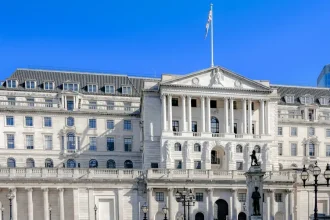

MOSCOW — The Bank of Russia has reduced its key interest rate by 0.75 percentage points to 14.25 per cent per annum, citing slower inflation and moderate improvement in economic activity, while warning that rising inflationary risks could limit further rate cuts.
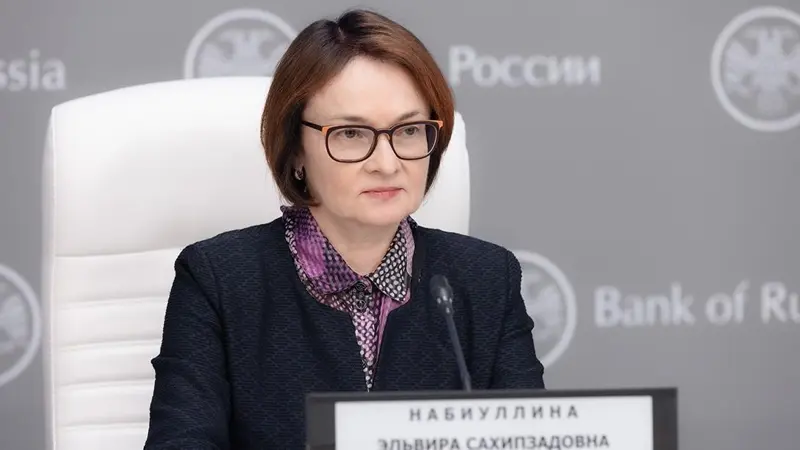
Bank of Russia Governor Elvira Nabiullina said the decision reflected easing price pressures due to the accumulated effects of tight monetary policy and a narrowing gap between demand and supply.
“Current price growth has slowed considerably in recent months, although this was largely influenced by one-off factors, including lower fruit and vegetable prices and the appreciation of the ruble,” she said following a meeting of the bank’s Board of Directors on Thursday.
She noted that underlying inflation had also slowed but remained within the range of four to five per cent on an annualised basis, while inflation expectations among households and businesses remained elevated.
Nabiullina warned that recent increases in fuel prices and the reversal of declining vegetable prices could put renewed pressure on inflation in the coming months.
She also highlighted that a change in the timing of housing and utility tariff indexation from July to October 2026 could temporarily reduce annual inflation figures, but stressed that it would only represent a shift in the timing of price increases.
On economic activity, Nabiullina said Russia’s economy showed signs of recovery in the second quarter of 2026 after weaker performance earlier in the year caused by temporary factors such as adverse weather and calendar effects.
The construction sector, which contributed significantly to the first-quarter GDP contraction due to a cold and snowy winter, has begun to recover, while overall output growth in the first half of the year remained moderate.
However, she said economic performance varied significantly across industries due to structural transformation, stronger government demand and limited capacity for further growth in private investment and consumer spending.
Consumer activity continued to grow moderately, supported by wage increases, although wage growth has begun to slow and remains uneven across sectors.
Nabiullina said labour market tightness was easing gradually, but labour shortages remained a concern in several regions.
On monetary conditions, she said interest rates across most financial market segments continued to decline following previous policy decisions, while long-term government bond yields rose slightly due to uncertainty over fiscal policy.
She said lending growth accelerated sharply in April and May, with increases recorded in unsecured consumer loans, car loans, market-based mortgages and corporate borrowing.
The governor said sustained rapid credit expansion, combined with a more expansionary fiscal policy than previously expected, could require tighter monetary policy to prevent excessive growth in money supply and renewed inflation.
Regarding external conditions, Nabiullina said tensions in the Middle East had driven higher global commodity prices and contributed to inflationary pressures in many countries.
For Russia, however, the immediate impact had been largely disinflationary, as higher commodity prices increased export revenues and supported the appreciation of the ruble.
She noted that while the risk of a prolonged conflict in the Middle East had decreased, uncertainty remained over its potential impact on global inflation, import prices and logistics costs.
Looking ahead, Nabiullina said the balance of risks had shifted further towards pro-inflationary factors, particularly due to fiscal expansion, labour shortages, supply constraints in certain sectors and uncertainty in the external environment.
She emphasised that the central bank’s future decisions would remain dependent on incoming data and that neither additional rate cuts nor the size of any reduction had been predetermined.
“The Bank of Russia may need to pause to assess new information and evaluate the impact of previous decisions. A balanced approach is essential to ensure inflation returns to a sustainably low level,” she said. —Bank of Russia Press Service