
LABUAN — Four researchers from the Labuan Faculty of International Finance (FKAL), Universiti Malaysia Sabah, have successfully led a UniMadani community empowerment project aimed at strengthening entrepreneurship among senior citizens and youth in Labuan through the production of local traditional cakes and food.
The project, known as the UniMadani Community Empowerment Project through the Local Traditional Cakes and Food Production Project for the Labuan Senior Citizens Community, achieved its objectives by empowering the community through knowledge transfer, entrepreneurship development and the production of traditional food products with income-generating potential.
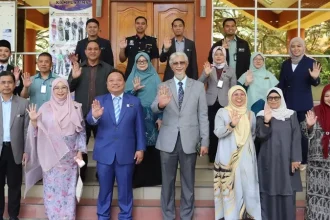
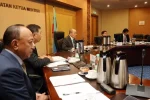
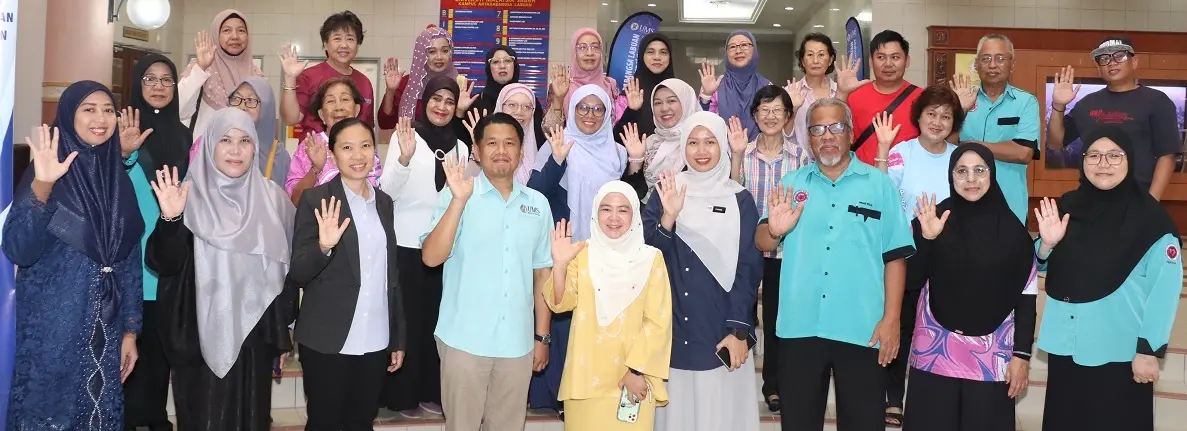
Its success was celebrated at the closing and business starter kit handover ceremony for the Community Empowerment Programme – Local Traditional Cakes and Food Production Project for the Labuan Senior Citizens Community, held at the Eureka Room, Universiti Malaysia Sabah Labuan International Campus (UMSKAL), last Tuesday.
The ceremony began with the presentation of the UniMadani 032 Project Final Report by project leader Dr Suzillah Sidek, who is also a senior lecturer at FKAL.
The presentation summarised the overall project implementation, achievement of objectives, community impact and plans to ensure the project’s sustainability. It was followed by a video presentation highlighting the project’s journey throughout its implementation.
The project was implemented by a team of researchers comprising Dr Suzillah as project leader, together with Dr Sharinah Puasa, Dr Ahmad Aizudin Hamzah and Dr Emily Yapp, who contributed their expertise in business management, marketing, innovation and community economic development.
Also present were Era Erna Umar Mayah, representing the director of the Social Welfare Department of Labuan; representatives of the Labuan Senior Citizens Activity Centre (PAWE Labuan) led by its deputy chairman Mohd Rizal Abdullah; committee members Haji Parno Wongso and Sunarseh Suyutoh; and PAWE Labuan supervisor Normillahwati Ismail.
A total of 15 PAWE Labuan members also attended the ceremony, along with nine recipients of the Frozen Traditional Cakes and Food Business Starter Kits, comprising PAWE Labuan members, youth entrepreneurs and FKAL lecturers.
The recipients were Azlin Lamit, Mohammad Irwan Kadir, Suria @ Salmiah Salleh, Patimah Akap, Sarimah Salleh, Mariam Sawal, Norfaizal Osman, Dismond Simpul and Diana Darman.
The starter kits were presented by Dr Suzillah, witnessed by Era Erna and Mohd Rizal.
Throughout the project, participants took part in three series of knowledge transfer programmes, which were carried out in phases to ensure comprehensive skills development.
The first series focused on business management and entrepreneurship development, conducted by project members to improve participants’ knowledge in business management, marketing and financial management.
The second series was a traditional kelupis-making workshop led by Patimah Akap, aimed at transferring knowledge and skills in producing local traditional food while helping to preserve and commercialise Labuan’s food heritage.
The final series introduced participants to food freezing technology, including food processing techniques using freezing technology, vacuum packaging and storage methods to extend product shelf life without compromising quality.
The programme also provided participants with opportunities to produce higher-quality traditional food products with added value for a wider market.
Among the project’s outcomes were the development of product identity, new packaging labels, the use of vacuum packaging, provision of food processing equipment and the production of frozen traditional food products that are more competitive and of higher quality.
Dr Suzillah said the success of the project was measured not only through the delivery of training, but also through the positive changes created within the community.
She said participants had gained new skills, confidence to start their own businesses and the ability to produce products that meet current market demand.
Dr Suzillah said the UniMadani project had achieved its targets by creating economic spillover for the community through enhanced knowledge, skills, product innovation and sustainable income-generating opportunities.
She said the project also strengthened collaboration between Universiti Malaysia Sabah, the Social Welfare Department and PAWE Labuan.
The project proved that community-based knowledge transfer could serve as a catalyst for local socioeconomic development, she added.
The success of the project is expected to serve as a model for future community empowerment programmes, in line with UniMadani’s aspiration to empower communities through education, innovation and strategic collaboration.