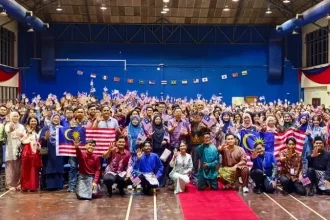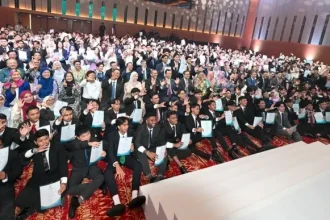

LABUAN — Universiti Malaysia Sabah (UMS) has strengthened its efforts to expand access to higher education through the UMS Aspirations Roadshow Programme for Form Six students from schools across Kuala Penyu district.
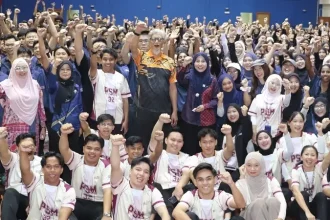
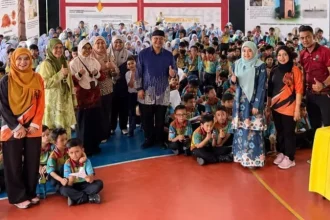
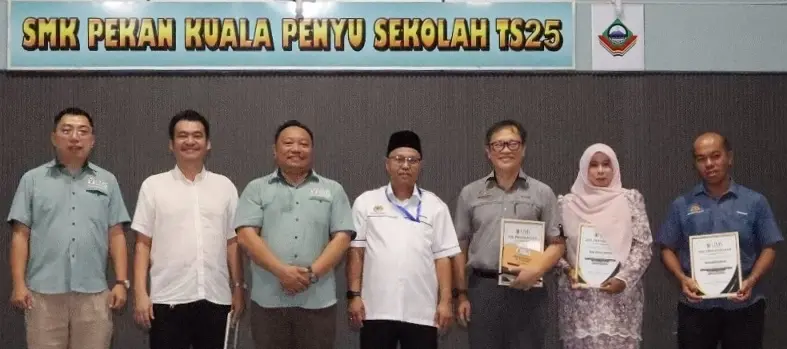
The programme, held recently at SMK Pekan Kuala Penyu, exposed students to opportunities to pursue studies at public universities, potential career pathways and the latest developments in the country’s higher education policies.
It was organised by the Labuan Faculty of International Finance (FKAL) in collaboration with the UMS Centre for Academic Development and Excellence (PPKA) as part of the university’s initiative to engage pre-university students.
The programme received the full support of UMS Deputy Vice-Chancellor for Academic and International Affairs Prof Datuk Dr Rossita Shapawi, while its coordination was led by PPKA director Assoc Prof Dr Darmesah Gabda.
The initiative reflects UMS’ continued commitment to strengthening strategic cooperation with Form Six schools throughout Sabah and preparing more students to pursue higher education.
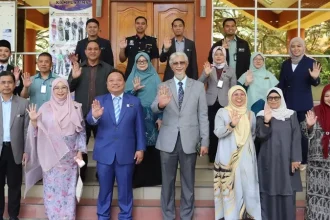
The programme was officiated by Kuala Penyu district deputy education officer for the School Management Sector Jamail Kadar.
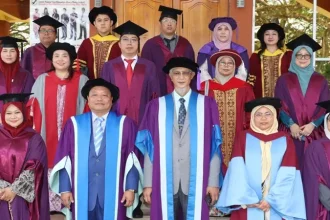
Also present were SMK Pekan Kuala Penyu principal Stanley Pelimos @ Mohd Ridwann Abdullah and FKAL dean Assoc Prof Dr Geoffrey Harvey Tanakinjal.
Other attendees included FKAL deputy dean for Academic and International Affairs Dr Ricky Chia Chee Jiun, deputy dean for Research and Innovation Dr Alesia Sigang Gugkang, deputy dean for Student Affairs and Alumni Dr Noor Hassanah Husin and senior deputy registrar Zamri Mohd Tuah.
In his opening address, Jamail expressed appreciation to UMS for its continued efforts to engage Form Six students, particularly those in rural areas.
“Programmes such as this are highly significant as they provide students with a clear understanding of higher education opportunities and help them plan their academic and career pathways more effectively,” he said.
Jamail said close cooperation between schools and universities was crucial to producing knowledgeable and skilled human capital capable of meeting the country’s future development needs.
Meanwhile, Geoffrey said the government was undertaking a major transformation of the pre-university education system through the transfer of the management of the Malaysian Higher School Certificate (STPM) and Matriculation programmes from the Ministry of Education to the Ministry of Higher Education.
“The policy, implemented under the Higher Education Development Plan 2026–2035, is aimed at elevating STPM as the country’s principal pre-university pathway,” he said.
Geoffrey said the measures included aligning the STPM curriculum with first-year university syllabuses, introducing credit-transfer mechanisms for selected subjects and providing broader recognition of the qualification.
“STPM graduates who obtain a cumulative grade point average of 4.00 are guaranteed a place at a public university.
“However, admission to a specific programme remains subject to the merit system, comprising 90 per cent academic achievement and 10 per cent co-curricular performance, as well as the capacity of the programme applied for,” he said.
Students were also briefed on academic programmes offered by UMS, particularly those at FKAL, including International Finance, International and Offshore Banking, International Marketing, Financial Economics and Islamic Finance.
The roadshow reflects UMS’ commitment to widening access to quality higher education, particularly for students in Sabah’s rural districts.
Through the outreach initiative, the university hopes more Form Six students will view STPM as a primary pathway to public universities and eventually become knowledgeable and competitive graduates capable of contributing to the development of Sabah and Malaysia.
The programme also underscored UMS’ continued role as a strategic partner of the Ministry of Higher Education, Ministry of Education, Sabah State Education Department and district education offices in strengthening the country’s higher education ecosystem.
UMS said the cooperation would help ensure prospective university students receive accurate, comprehensive and meaningful information on higher education opportunities.